
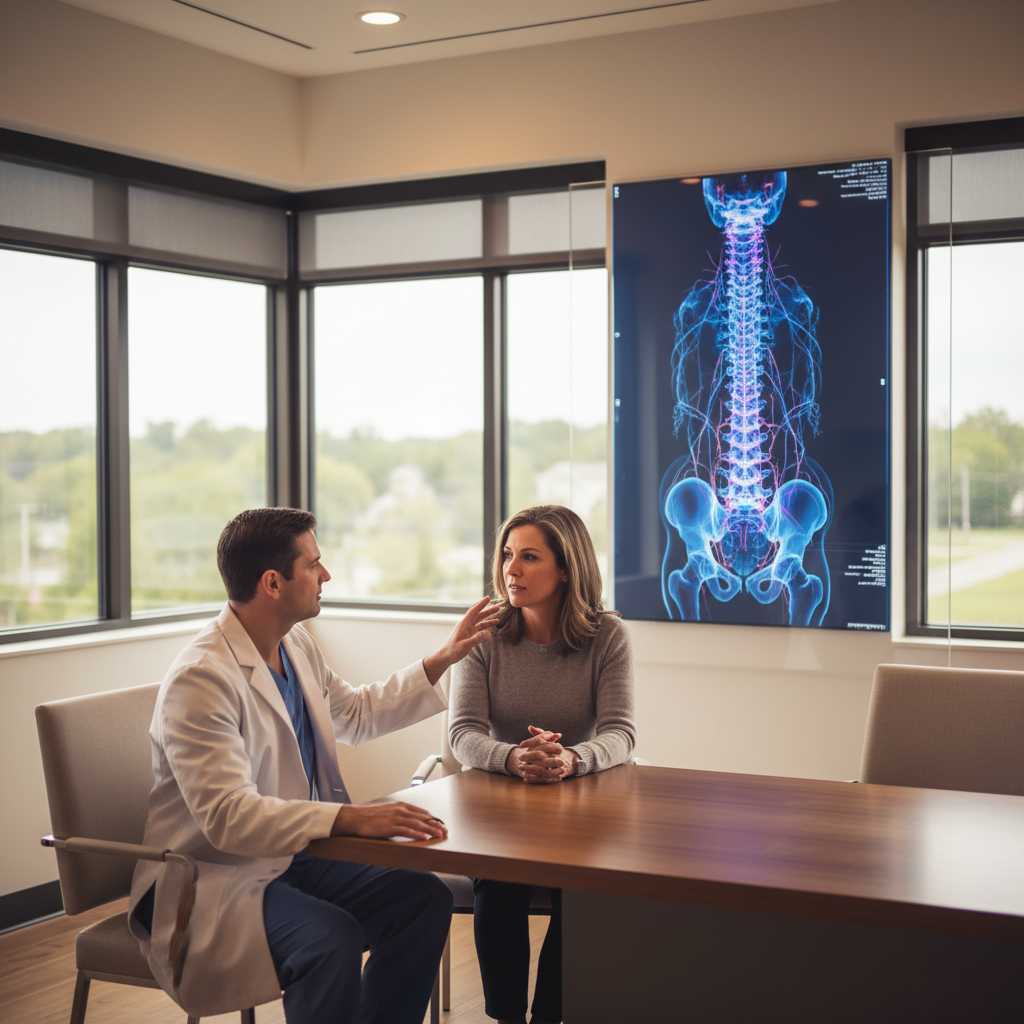
End Spinal Pain With Measurable Data And Exact Diagnostic Criteria
Precision Spine Surgery. Measurable Outcomes. Total Transparency.
We replace medical guesswork with the Precision Protocol. You receive exact success rates, 12-week recovery timelines, and absolute clarity on whether you actually require surgical intervention.
84%
Microdiscectomy Success Rate
Measured at 12 weeks post-operation for patients with confirmed L4-L5 radiculopathy.
6 Weeks
Mandatory Conservative Care
We require documented physical therapy and injection protocols before authorizing surgical intervention.
< 2%
Surgical Infection Rate
Maintained across our New Jersey facilities through strict environmental controls and prophylactic protocols.
Surgical Indications And Diagnostic Criteria
Lumbar Herniated Disc
We evaluate L4-L5 and L5-S1 extrusions causing severe leg pain. Surgery is only recommended when 6 weeks of targeted epidural injections fail to resolve radiculopathy.
Spinal Stenosis
Narrowing of the spinal canal requires precise decompression. We measure the exact millimeter of encroachment on your MRI before discussing a laminectomy.
Degenerative Disc Disease
Chronic axial back pain is notoriously difficult to treat. We use provocative discography to isolate the exact pain generator before considering spinal fusion.
Cervical Radiculopathy
Arm pain and numbness originating from the neck. We map the exact dermatome affected to determine if an anterior cervical discectomy and fusion (ACDF) is indicated.
Spondylolisthesis
Vertebral slippage requires mechanical stabilization. We grade the slip from Grade I to IV to determine if you need a minimally invasive TLIF procedure.
Failed Back Surgery Syndrome
Persistent pain after previous operations requires complex revision. We conduct a 4-part diagnostic workup to identify hardware failure, adjacent segment disease, or pseudoarthrosis.
The Precision Protocol Qualification Process
1
Submit Your Imaging
Upload your recent MRI and X-ray files through our secure portal. Our clinical team reviews your DICOM files to measure exact nerve compression before you even step into the clinic.
2
Complete The Diagnostic Audit
We conduct a 45-minute clinical examination mapping your motor deficits and reflex asymmetry. You receive a binary yes or no on whether your symptoms match your imaging.
3
Review The Outcome Matrix
If surgery is indicated, we present your specific statistical probability of pain relief. You get a printed 12-week recovery timeline detailing exactly when you can return to work and exercise.

Joseph David, MD
Board-Certified Spine Surgeon & Medical Director · 18 Years
Spine surgery suffers from a lack of objective transparency. I spent the last 18 years developing the Precision Protocol to eliminate the guesswork from neurosurgical outcomes. We do not operate unless the clinical presentation perfectly matches the radiographic evidence. My goal is to give you the exact statistical probability of your recovery so you can make an informed, logical decision.
- Fellowship-Trained in Complex Spine Surgery
- Member, North American Spine Society
- Chief of Orthopedic Spine Surgery
Frequently Asked Questions
How do I know if I actually need spine surgery?
You need surgery when three criteria are met. First, you have a structural lesion visible on an MRI. Second, your physical symptoms match that specific lesion. Third, you have failed 6 to 8 weeks of documented conservative treatments like physical therapy and epidural injections.
What is the exact recovery time for a microdiscectomy?
Patients return to desk work in 7 to 10 days. Walking begins on day one. We restrict bending, lifting, and twisting for exactly 6 weeks to allow the annular tear to scar over and prevent re-herniation.
Do you accept my health insurance for these procedures?
We operate out of facilities in Morristown, Summit, and Edison that accept Medicare and most major commercial PPO plans. We run a complete verification of your out-of-pocket surgical costs prior to your diagnostic audit.
Why do you require a review of my MRI before scheduling a consultation?
We respect your time. If your MRI shows no surgical target, a surgical consultation is a waste of your afternoon. We only bring you in if the imaging indicates a high probability that our surgical protocols will resolve your pain.
Stop Guessing. Get The Clinical Data.
Submit your MRI report today. We will tell you exactly what is wrong and whether surgical intervention is statistically proven to fix it.
Written & Reviewed By
Joseph David
Physician
Joseph David is a dedicated physician with extensive experience in the field of spinal health and orthopedic rehabilitation. Based in New Jersey, he has built a reputation for excellence through his significant tenure at the Spine Center and Orthopedic Rehabilitation of Englewood. During his time there, which spanned over three years, he served as a Fellow, honing his skills in advanced diagnostic and treatment protocols for complex spinal conditions. His background in orthopedic rehabilitation allows him to provide a comprehensive perspective on patient recovery and long-term wellness. As a contributor to njspinesurgeons.online, Joseph leverages his clinical background to provide authoritative insights into the latest advancements in spine surgery and non-invasive treatments. His professional journey in Englewood has equipped him with a deep understanding of the specific needs of patients in the New Jersey area. Joseph is committed to staying at the forefront of medical research to ensure that his readers receive the most accurate and up-to-date information regarding their spinal health. He is driven by a profound passion for helping others regain their mobility and improve their overall quality of life through expert medical guidance.
Latest from Our Blog

Why Your Post-Op Pain Might Spike When You Least Expect It
I remember the moment vividly. After my first spinal surgery, I was thrilled to finally have relief from years of…

Why Your Spine Evaluation After a Car Crash Needs a Specialist, Not an ER Doctor
I remember the moment perfectly—lying on the cold plastic of the ER gurney, feeling a dull ache spreading through my…
How to Verify Your Surgeon is Board-Certified Without Relying on Marketing Fluff
I remember the moment vividly — lying in bed, my back sending shooting pains, scrolling through endless reviews for nearby…